
As new parents, deciding what to dress your baby in and how to dress them can be a real headache. Especially after buying a baby sleep sack, you often ask yourself, “Does my baby need to wear clothes while in the sleep sack?” Will they be too hot if I dress them too warmly? Will they catch a cold if I dress them too lightly?
This article will provide detailed answers to this question from three perspectives: safety, comfort, and season, helping you to use baby sleep sacks scientifically.
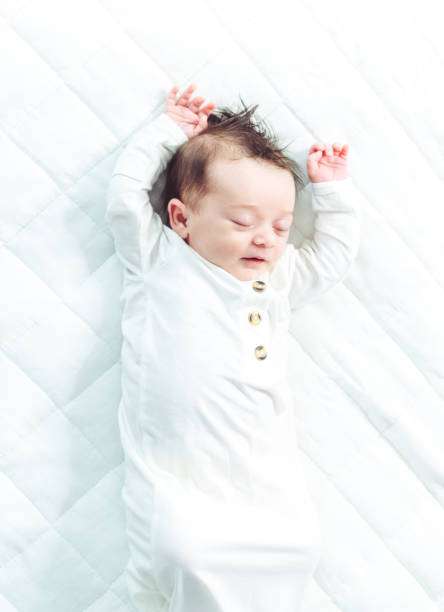
What is a baby sleep sack?
A baby sleep sack, also known as a kick-off blanket, is a sleep product specifically designed for babies. Its biggest feature is its fixed design, preventing babies from kicking off the blanket while sleeping, thus avoiding the risk of them getting cold or suffocating. Compared to traditional blankets, baby sleep sacks are safer and make it easier for parents to manage their baby’s nighttime body temperature.
Baby Sleep Sack when my baby was three months old and found that I no longer needed to cover him with a blanket frequently at night. My baby slept more soundly throughout the night, and I also slept more peacefully.
Should I put on some clothes?
The answer is: the baby needs to wear clothes, but the exact amount depends on the thickness of the baby sleep sack, the season, and the room temperature.
1. Choose the amount of clothing based on the thickness of the baby’s sleep sack.
Thin style: Suitable for summer or environments with high room temperature, babies can wear thin short-sleeved onesies or baby vests.
Medium-thickness version: Suitable for spring and autumn or slightly cooler environments. Babies can wear long-sleeved onesies to maintain a suitable body temperature.
Thick version: Suitable for winter or cold environments, babies can wear thin cotton clothes or thermal underwear.
Tip: Don’t dress your baby in too many clothes just because the sleeping bag is thick; otherwise, it’s easy for them to overheat or even get heatstroke or breathing discomfort.
2. Adjust clothing according to room temperature.
A baby’s comfortable temperature is generally between 18℃ and 24℃. Clothing suggestions for different room temperatures:
| room temperature | Baby Clothing Suggestions | baby sleep sack type |
| >28℃ | Thin vest or short-sleeved bodysuit | Thin sleeping bag |
| 24~28℃ | Short-sleeved or thin long-sleeved bodysuit | Thin or medium sleeping bag |
| 20~24℃ | Long-sleeved bodysuit | Medium-thickness sleeping bag |
| 18~20℃ | Thin cotton clothing or thermal underwear | Medium or thick sleeping bag |
| <18℃ | Thermal underwear and outerwear | Thick sleeping bag |
This combination ensures that the baby will neither get cold nor be uncomfortable from overheating.
3. Safety principles for baby sleep sacks and clothing
Avoid overdressing: If a baby wears too many clothes, especially a thick baby sleep sack, it can easily lead to an overheated body temperature.
Avoid restricting movement: Clothes and sleeping bags should not be too tight to ensure the baby’s hands and feet are free and comfortable to move around in.
Baby sleep sacks made of pure cotton or organic cotton are softer and more breathable, helping to regulate body temperature.
In the summer, I dress my baby in a thin onesie with a thin baby sleep sack. My baby doesn’t sweat too much when turning over at night and sleeps soundly all night.
Seasonal Clothing Guide
summer
Recommendation: Short-sleeved or vest-style bodysuit + thin baby sleep sack
Note: Avoid long sleeves or thick sleeping bags to prevent heatstroke.
spring and autumn
Recommendation: Long-sleeved bodysuit + medium-weight baby sleep sack
Note: Adjust clothing according to nighttime temperature; wear thin socks if necessary.
winter
Recommendation: Thermal underwear + thick baby sleep sack
Note: Try not to use extra blankets to avoid overheating.
Methods for handling nighttime room temperature fluctuations
If the temperature in the baby’s room fluctuates greatly, you can add a thin blanket over the baby’s sleep sack, but it is best to avoid covering the baby’s head or chest and abdomen directly to prevent overheating or suffocation.
How can I tell if my baby is dressed appropriately?
A simple test method is the back-of-neck temperature touch test:
Touch the back of your baby’s neck. If the neck is slightly warm but not sweaty, the clothes are appropriate; if it is too hot and sweaty, the clothes are too thick; if it feels cold, more clothes need to be added.
In addition, the baby’s behavior is also a basis for judgment: if the baby can roll over freely, sleeps soundly, and has warm hands and feet, it means that the baby sleep sack and clothing combination is appropriate.
Common mistakes in dressing a baby sleep sack
The idea that a sleeping bag can completely replace clothing:
In reality, a baby sleep sack is just a blanket to prevent kicking off, not the same as warm clothing, and you still need to wear appropriate clothing in conjunction with it.
Dressing babies in too many clothes and using thick sleeping bags:
Many new parents worry that their babies will catch a cold, so they dress them in too many layers, which can easily make the babies overheat or even sweat, thus affecting their sleep.
Ignoring season and room temperature:
It’s unscientific to dress babies in thick sleeping sacks and long-sleeved shirts in summer and thin sleeping sacks in winter. The key is to flexibly match the thickness of the baby’s sleep sack with the ambient temperature.
When my baby was four months old, I noticed that he would frequently turn over and sweat at night because I dressed him in too many clothes. After adjusting the thickness of his clothes and sleeping bag, he slept soundly all night, and I had fewer worries at home.
Tips for buying baby sleep sacks
Choose the appropriate thickness: Select thin, medium, or thick versions based on the season and room temperature.
Choose breathable materials: pure cotton, bamboo fiber, or organic cotton fabrics, which are soft and comfortable.
Check the safety design: the shoulder buttons are secure, and there are no loose small parts to prevent accidental ingestion or strangulation.
Consider the size: Choose the appropriate length for your baby’s different ages to avoid it being too long or too short.
Summarize
Baby sleep sacks need to be dressed, but the number and thickness of clothing should be adjusted flexibly according to the type of sleep sack and room temperature.
Safety principles: Clothing should not be too thick or too tight, and sleeping bags should be made of breathable and soft material.
Seasonal outfit combinations: Summer: light clothing + light sleeping bag; Spring and Autumn: long-sleeved clothing + medium-thick sleeping bag; Winter: thermal clothing + thick sleeping bag.
Methods of assessment: Touch the back of the neck to check temperature, observe the warmth of the baby’s hands and feet, and check their sleep status.
By scientifically matching baby sleep sacks and clothing, babies can sleep more comfortably at night, reducing parents’ worries.
Want your baby to sleep better at night? Choose a high-quality baby sleep sack and carefully select clothing to ensure your baby’s safety and comfort, giving parents peace of mind at night. Click the link below to choose the right sleep sack for your baby and start sleeping soundly tonight!