
Baby Won’t Sleep Even Though They’re Wearing a Baby Sleep Sack? Here Are a Few Possible Reasons.
Many new parents encounter the same dilemma: they buy a baby sleep sack with good reviews, but their baby cries and refuses to sleep as soon as they put it on or even wakes up in the middle of the night and resists.
I first used the baby sleep sack for my child. I wondered if I had bought the wrong one. It looked very soft and safe, but my child would start squirming as soon as I put him down, and his sleep quality actually worsened.
It was only later that we discovered that when a baby doesn’t sleep, it’s often not because the product is “useless,” but because there are problems with the way it’s used, the timing, or the details.
Baby Sleep Sack Is Not a “Sleep-Inducing Tool”
Many parents subconsciously regard baby sleep sacks as a product that “you should just put on and sleep,” but in fact, it is more like part of a sleep support environment.
Even if the sleeping bag itself is of the best quality, the baby may still refuse it if the following conditions are not met:
- Unstable sleep rhythm
- Unsuitable ambient temperature
- The baby is not used to being restricted in his/her body.
- The way the clothes are worn makes the child uncomfortable
I later realized that it wasn’t that the child disliked the sleeping bag, but rather that he disliked the “sudden change in sleep experience.”
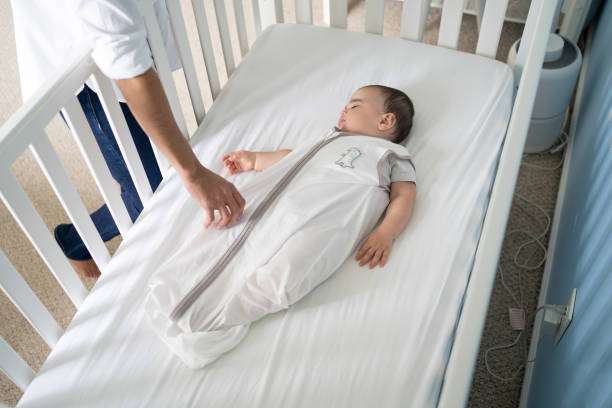
Why Doesn’t Your Baby Want to Wear a Sleeping Bag? There Are More Common Reasons Than You Might Think.
Inappropriate Temperature Is the Most Easily Overlooked Reason.
Many babies “don’t sleep” because they are too hot or too cold.
- The room was already heated, but he was still wearing thick clothes.
- Summer nights are cool, but sleeping bags lack breathability.
- Parents use adult senses to judge whether their baby is hot or cold.
That’s the mistake I made. I thought it was “just right,” but my child’s back was already slightly sweaty, so naturally he couldn’t sleep soundly.
Tip:
Touching the back of the neck is more accurate than touching the hands and feet.
If the Baby Sleep Sack Is the Wrong Size or Style, It Restricts Movement.
Some babies are naturally active, so if they need a sleeping bag:
- The legroom is too narrow
- The crotch is too short
- Zipper to the chin
This will cause them to strongly resist.
This is why some people consider the same baby sleep sack a “lifesaver,” while others say it’s “completely useless.”
Dressing the Baby Too Suddenly, the Baby Hasn’t Adjusted to the Baby Sleep Sack.
For many children, a bedtime ritual is very important.
If you were used to it before:
- Free kick
- Cover lightly with a quilt
- Holding him to sleep
A sudden switch to a closed sleeping bag can easily cause anxiety.
I later learned something:
Letting children “wear and play” in the clothes when they are awake and in a good mood is much more effective than putting them directly to sleep.
Sleeping Bag ≠ Source of Security
Some parents find that their babies cry even more after wearing the clothes.
The reason is often that what children really need is companionship, familiar scents, and a consistent bedtime routine, rather than a single tool.
Don’t Rush to Dismiss These Signs: These “Sleeplessness Symptoms” Are Actually a Normal Phase.
Many babies will briefly resist sleeping bags during the following stages:
- 4–6 months: Rolling over period
- 7–9 months: Excitement period before crawling and standing
- Teething period, growth spurt
- Sleep regression
During this stage, you may wake up frequently at night even without wearing a sleeping bag.
The key is not “to solve it immediately,” but “not to blame all problems on the sleeping bag.”
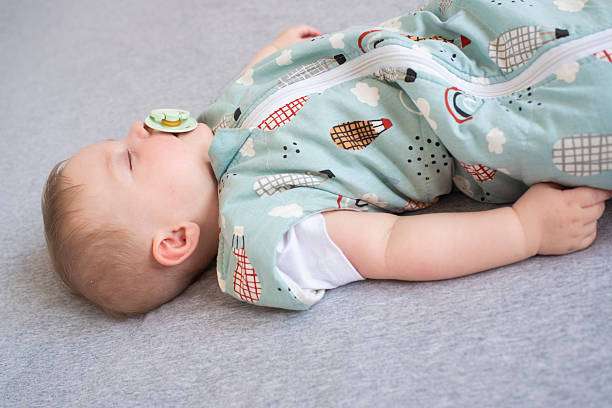
5 Practical Ways to Help Your Baby Gradually Accept a Sleeping Bag
Start During the Day, Not at Night.
Try it during a daytime nap; the cost of failure is the lowest.
- Baby’s emotions are stable
- Soft light
- Not pursuing success in one go
This step is often more important than you think.
First, wear a “Semi-Open” style.
If the baby strongly resists, you can choose:
- Leg-splitting style
- Detachable sleeve design
- The zipper is two-way and easy to adjust.
Let the child gradually get used to the feeling of being wrapped up.
Adjust the order in which you wear the items, instead of just changing the products.
Often, the problem isn’t with baby sleep sacks but with the process:
Bathing → Touching → Dressing → Sleeping bag → Putting to sleep
Compare
While playing around, put it on and put it on the bed
The difference in results is very obvious.
Note That the “Inner Layer” Is More Important Than the Sleeping Bag Itself.
The sleeping bag is just the outer layer; what you wear inside is equally important.
- Pure cotton bodysuit
- Avoid layering
- No hard buttons or labels.
One time, I simply changed to a softer bra, and my child fell asleep much faster.
Give It Time; Don’t Give Up Immediately.
For many families, the turning point occurs between the 3rd and 5th day.
She cried on the first day, struggled on the second day, accepted half of it on the third day, and started sleeping longer on the fourth day.
When Is It Really No Longer Appropriate to Continue Using baby sleep sack?
If any of the following situations occur, it is recommended to suspend use:
- Excessive sweating and red skin
- The baby remained highly resistant.
- Sleep quality has declined significantly
- Other environmental factors have been ruled out.
Sleeping bags are auxiliary tools, not necessities.
FAQ:
Q1: At what age is it suitable for babies to start wearing baby sleep sacks?
A: Generally, you can start trying them when they can kick off the blankets and roll over, but there is no absolute time.
Q2: Will not wearing a sleeping bag affect safety?
A: The key is whether the sleeping environment is safe. Lying flat alone without any extra items is more important.
Q3: Will switching brands definitely solve the problem?
A: Not necessarily. Many problems stem from size, temperature, or usage.
Q4: Should I insist on the baby wearing a sleep sack if the baby is crying?
A: You can observe if there is mild discomfort, but it is not recommended to force the baby to wear a sleep sack if the baby is crying intensely.
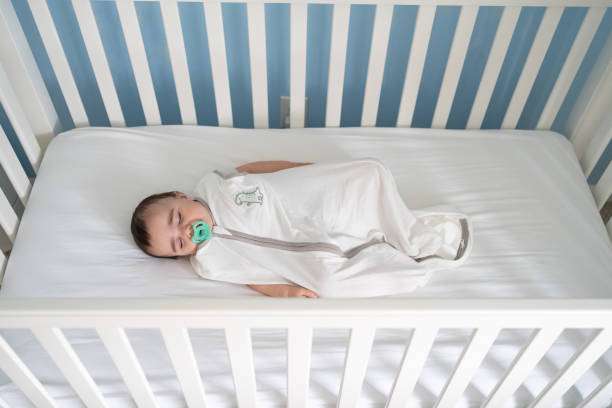
Summarize:
Many parents experience anxiety, self-blame, and even doubt about whether they made the wrong choice when faced with the question of “what to do when baby sleeps soundly but won’t sleep.”
For a baby sleep sack that’s more suitable for your baby’s developmental stage, made of soft materials, and with a flexible design, consider starting with an adaptive, adjustable style to let sleep return to its most relaxing form.