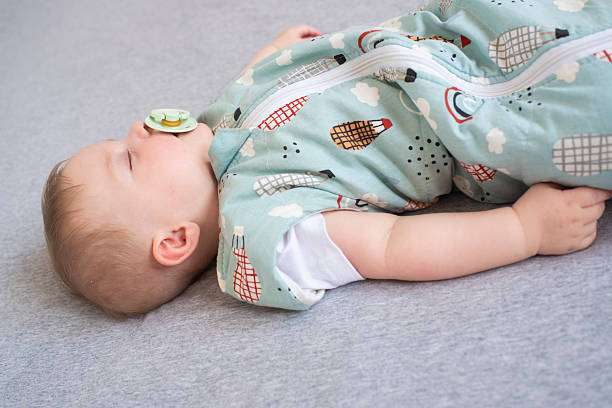
I first used a baby sleep sack for my baby, and I was actually a little hesitant.
On one hand, it did seem safer than a blanket, but on the other hand, seeing my baby wrapped up inside, I couldn’t help but worry: Would it be stuffy? Would it not breathe properly? Would he sweat profusely while sleeping?
A baby sleeping in a sleep sack for the first time has similar questions. This concern is amplified, especially in summer, during seasonal changes, or when the baby is prone to sweating.
Therefore, in this article, we will not rush to conclusions but rather explain the issue of “whether it’s boring or not” step by step from the perspective of actual use.
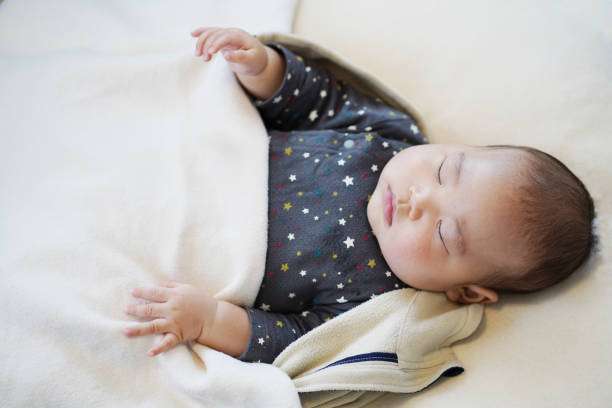
Whether a baby’s sleep sack is “stuffy” or not actually depends on these key factors.
Many people simply attribute the “suffocation” issue to “a problem with the baby sleep sack itself.”
But after actually using it, I realized it’s more of a combination of factors.
1. Fabric is one of the decisive factors.
Different materials have vastly different breathability.
Common baby sleep sack fabrics include:
pure cotton
bamboo fiber
Organic cotton
Quilted or stuffed
Experience sharing:
My baby initially used a thick, quilted cotton version, which felt very soft, but his back sweated a lot when using it in late summer. Later, we switched to a thin, pure cotton version, and the sweating improved significantly at the same room temperature.
Therefore, the problem of feeling stuffy is often not the sleeping bag itself, but rather the choice of the wrong material.
2. Does the thickness match the season?
This is a point that is very easy to overlook.
Some baby sleep sacks are labeled as “breathable,” but they are actually designed for fall and winter. If used in spring and summer, they will naturally feel stuffy.
It can be simply understood as
Summer: Lightweight, unfilled
Spring and Autumn: Thin quilted or medium thickness
Winter: Thickened version, to be used at room temperature.
Even the best fabric can’t save you if the thickness and environment don’t match.
3. Room temperature and ventilation conditions
Many parents overlook environmental factors.
Same baby sleep sack:
In a well-ventilated room at 26°C
And in a room at 28°C with poor air circulation
The baby’s sensations are completely different.
I later discovered that as long as the room is well-ventilated and the temperature is controlled before bedtime, the baby won’t feel uncomfortable even if a slightly thicker sleeping bag is used.
Why do some babies sweat easily when using a sleeping bag?
Here is a very important but often overlooked point:
the individual differences in the baby’s constitution.
1. Infants dissipate heat differently than adults.
Infants mainly pass through:
head
neck
back
To dissipate heat.
If the sleeping bag is poorly designed, such as having poor back ventilation or being too tightly wrapped around the neck, it can easily cause heat buildup.
2. Some babies are naturally prone to sweating.
My baby is a “sweaty baby.”
Even if he only wears a thin cotton shirt, his back will easily get slightly damp after he falls asleep.
In this situation, instead of worrying about whether a baby sleep sack will be stuffy, it’s better to:
Choose a lighter and thinner style
Control the number of layers worn
Pay attention to the condition of your back and neck.
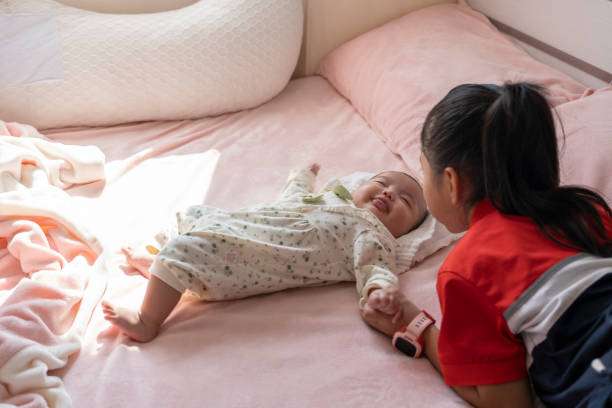
Which is more likely to make a baby feel suffocated: a sleep sack or a blanket?
This is a hidden comparison in the minds of many parents.
1. The problem with blankets isn’t just that they’re stuffy.
Problems with traditional quilts include:
Easy to kick away
It may cover the mouth and nose
Compression of the chest and abdomen
From a user experience perspective, kicking the blankets around can actually make it easier for certain areas to become stuffy or cold.
2. The advantage of sleeping bags is that they provide a more even temperature distribution.
A proper baby sleep sack can help distribute heat more evenly and prevent:
Covering the whole body for a while
Fully exposed in a moment
From my own experience, as long as you choose the right style, a sleeping bag is actually less likely to cause your baby to feel hot or cold compared to a blanket.
How can I tell if my baby is “sleeping too stuffily”?
Instead of getting bogged down in theories, learn to observe.
1. Look at the back, not the hands and feet.
Many parents like to touch hands and feet to judge whether they are hot or cold, but this is inaccurate.
The correct way is:
Gently touch the baby’s back
If warm and dry → suitable
If noticeably damp, it may be overheating
2. Pay attention to sleep patterns.
If the baby:
Difficulty falling asleep
I wake up frequently at night
Irritability and frequent tossing and turning
It may also be related to being “too bored.”
Choosing a baby sleep sack, how can you avoid the problem of it feeling stuffy?
This is the practical part that many parents are truly concerned about.
1. Prioritize breathable fabrics.
The key words are not “thick” or “warm,” but rather
breathable
Skin-friendly
Good moisture absorption
2. Pay attention to the design of the collar and cuffs.
A design that’s too tight can hinder heat dissipation.
A well-tailored design, on the other hand, is more comfortable.
3. Don’t be greedy for “multi-functional solutions in one piece.”
Some sleeping bags are labeled “suitable for all seasons,” but they are often not comfortable enough in extreme weather.
Preparing according to the seasons actually gives me more peace of mind.
FAQ:
Is a baby sleep sack really suitable for summer?
Yes, but only if you choose a lightweight, breathable summer version and control the room temperature.
Q2: Does a baby sweating mean the sleeping bag is unsuitable?
Not necessarily. It depends on the degree of sweating, the location of the sweating, and the baby’s constitution.
Q3: Do I need to wear a lot of clothes under my baby sleep sack?
Usually, one layer of underwear is enough; avoid layering too many clothes.
Q4: Will it be more stuffy if I don’t turn on the air conditioner?
The key is not the air conditioner but the room temperature and air circulation.
Q5: When can we stop using a sleeping bag?
You can gradually transition to a sleeping bag once your baby can roll over steadily and adjust their sleeping position on their own.
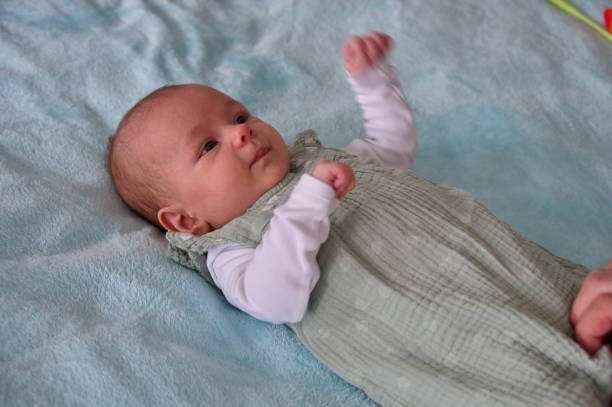
Conclusion:
Looking back, my initial concerns about whether a baby sleep sack would be stuffy actually stemmed more from a lack of understanding and experience.
Once I chose the right material, thickness, and usage method, it actually became something that gave me peace of mind.
A proper baby sleep sack is not about “wrapping” the baby but about making sleep more stable and safer.